One of the biggest threats to tree health is disease. In Illinois, trees face many challenges, like harsh winters and humid summers that create the perfect environment for fungi and bacteria. Many tree diseases start quietly, with only subtle changes in leaves or bark, but if left untreated, they can weaken or even kill your trees over time.
The good news is that most of these problems can be managed or even prevented with the proper care. Here’s a look at some of our area’s most common tree diseases and what you should know about them.

Anthracnose
Anthracnose is a fungal disease that often targets shade trees like sycamores, oaks, and maples. It usually appears in cool, wet spring weather, making it especially common in our region.
You’ll often notice anthracnose starting with irregular dark brown or black blotches on young leaves. Infected leaves may curl, become distorted, or fall prematurely, leaving your tree looking sparse early in the season. On sycamores, anthracnose can cause severe defoliation in spring, though trees often put out new leaves later once conditions dry out.
Regular cleanup of fallen leaves can help reduce the spread of anthracnose since the fungus can overwinter in debris. Pruning for better air circulation can also help reduce the fungus. Consider professional treatments if the problem returns year after year.
Dutch Elm Disease
American elms have been devastated by Dutch elm disease for decades. This aggressive fungal disease spreads through elm bark beetles and can move quickly through entire neighborhoods.
The first signs are often easy to miss. Typically, one or two branches at the top of the tree will develop yellow or wilting leaves while the rest of the canopy still looks healthy. Over time, these symptoms spread downward, and entire tree sections die back. Eventually, the whole tree can be lost if the disease isn’t caught early.
Infected limbs can sometimes be removed to save the tree if caught early. Preventive treatments can also help protect healthy elms nearby. If the tree is too far gone, safe removal is often necessary to keep the disease from spreading.
Oak Wilt
Oak wilt is a severe fungal disease affecting red and white oaks, though red oaks are especially vulnerable. Once infected, red oaks usually die within a single season. It usually starts at the top of the canopy. Leaves begin to wilt and turn dull green, bronze, or brown, often falling while still partially green. The decline can be rapid and dramatic, and once the fungus takes hold, it isn’t easy to stop.
Because oak wilt spreads through root systems and beetles, infected trees need immediate professional attention. Avoid pruning oaks during the growing season, as fresh cuts can attract the insects that carry the fungus. If you suspect oak wilt, call a certified arborist right away.
Tar Spot
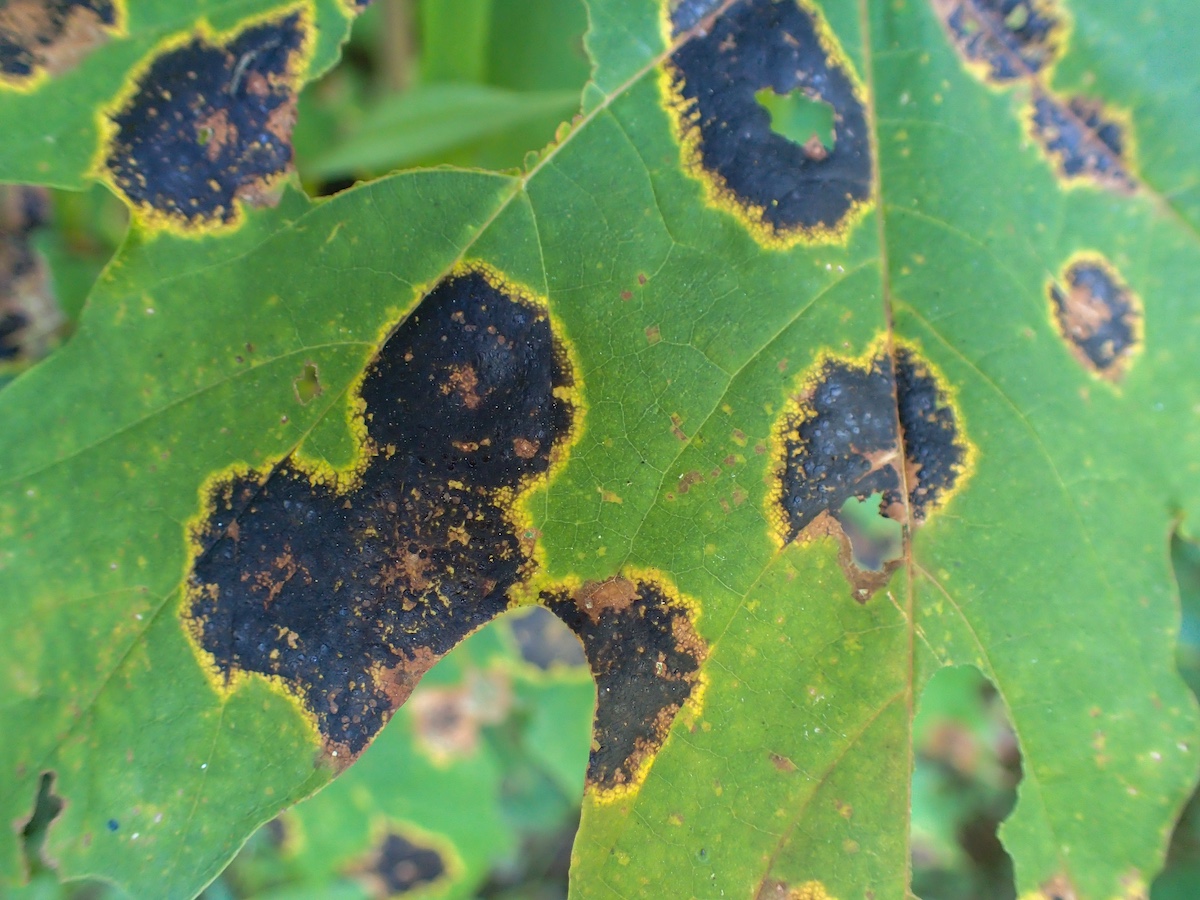
Tar spot is another common issue for maples, including Norway and silver maples, which are widespread in Chicagoland. In mid to late summer, yellow patches appear on leaves. These spots eventually turn into thick, raised black areas that look like drops of tar. While it looks alarming, it’s mostly cosmetic and rarely causes long-term harm.
Rake and remove infected leaves in the fall to help reduce the fungus next year. While treatment is rarely necessary, a regular schedule of proper watering and mulching keeps maples strong enough to handle minor infections.
Apple Scab
You’re probably familiar with apple scab if you have crabapple trees in your yard. This fungal disease doesn’t usually kill trees, but it can make them look rotten and weaken them over time. In spring, you’ll first notice small, olive-green spots on young leaves and fruit.
As the disease progresses, these spots darken and expand, often turning black and velvety. By mid-summer, infected leaves may curl, yellow, and drop prematurely, leaving the tree looking bare.
Annual cleanup of fallen leaves and fruit can help reduce the fungus. Planting disease-resistant crabapple varieties and applying preventive treatments in spring can also keep this disease under control.
Fire Blight
Fire blight is a bacterial disease that is especially hard on apple, pear, and crabapple trees. Warm, wet springs create the perfect conditions for it to spread. This disease causes a dramatic “burned” appearance on infected branches, flowers, and shoots. New growth suddenly turns black or brown and shrivels, often bending into a hook-like shape known as a “shepherd’s crook.”
The infection can spread quickly through twigs and branches if left unchecked. Prune out infected branches well below the affected area, disinfecting tools between cuts. Severe infections may require professional treatment or removal to prevent spread to nearby trees.
Tree diseases can be tricky to spot and even harder to treat once they’ve advanced. Preventive care and regular inspections are the best way to protect your landscape. Healthy trees are naturally better at resisting infections, so proper watering, mulching, and pruning go a long way.
If you’re worried about a tree in your yard or have noticed unusual spots, wilting, or early leaf drop, reach out to Abbott Tree Care. Our certified arborists will assess the issue, recommend the best treatment, and help protect your trees for the long haul.